
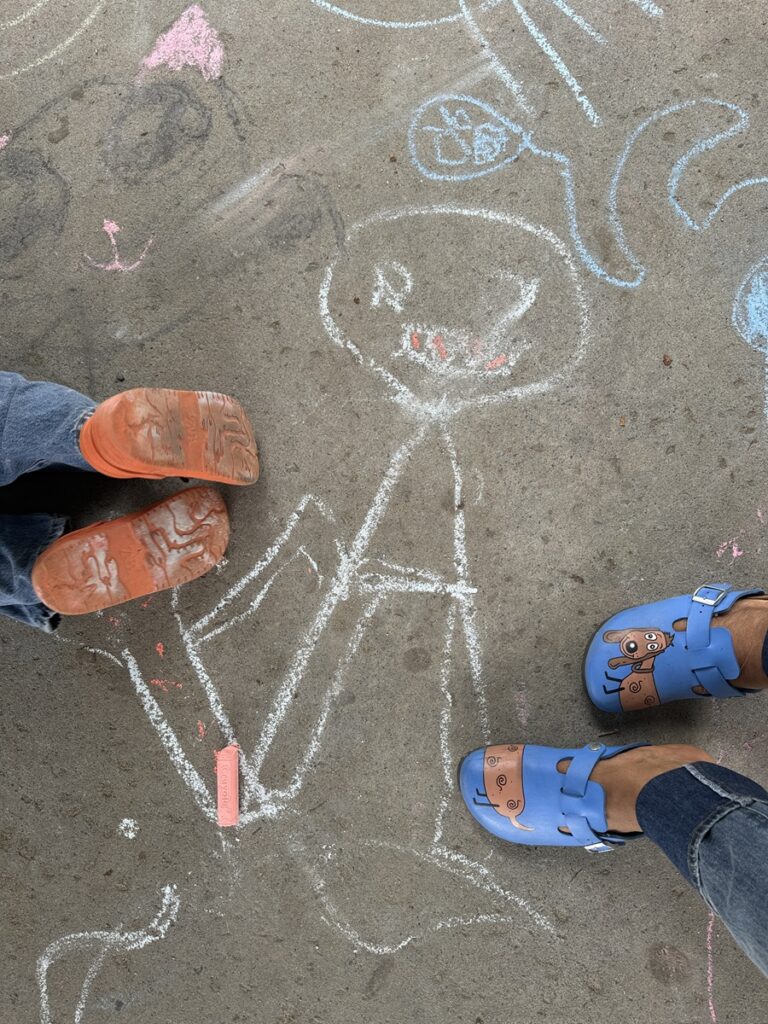
The Day Everything Felt Familiar and New
The waiting room looked the same as it always had; sterile, beige, almost gentle in its attempt not to provoke emotion. The clock ticked the same way it did the first time, and still, my pulse raced as though I hadn’t been here before. I had promised myself I would be calm this time. I’d rehearsed it like a scene in a play; how I’d sit, how I’d smile, how I’d thank the doctor when she finished speaking.
And then she said it.
Those words again.
“Your youngest is also on the autism spectrum.”
The ache arrived instantly. Familiar, yet raw. My chest remembered before my mind did. The room went still, the air thickened and suddenly my rehearsed calm disappeared. All I could manage was a nod and a polite, “Thank you for confirming.”
There’s something no one tells you about hearing the same life changing news again; it doesn’t get easier. No matter how many times you hear it.
Coming Home to Myself
We drove home with my son’s small hand resting in mine. The city looked ordinary, but nothing in me felt ordinary anymore. By the time we reached the house, I could already feel my body doing what mothers’ bodies do; moving on instinct when the mind cannot.
I rinsed rice in a steel bowl until the water ran clear; it sort of kept me steady. The scent of garlic in hot oil filled the kitchen, and for a moment I remembered who I was beyond the ache: a woman who builds calm out of chaos.
Toni came in quietly, his face a mix of concern and knowing. He didn’t need to ask; we’d walked this road three times before. He put his arms around me and whispered, “We’ll be fine.” I nodded, because that’s what faith sounds like when words are too heavy.
What Strength Really Means
Strength, I used to think, was composure; the tidy kind you can wear like pressed clothes. But that evening, while the rice simmered and the house hummed with ordinary noise, I realised that strength is far less elegant.
It weeps in the bathroom and still gets dinner on the table.
It lies awake at night planning school meetings.
It cries out quietly, asking heaven for breath, then takes it.
Strength is soft, not hard. It is love that keeps showing up.
I am a mother of four autistic children now. The sentence feels both enormous and completely normal. Somewhere between the first diagnosis and the fourth, I stopped needing to explain our life. Autism parenting has become a way we’ve learnt to live by here in Canada’s true north.
Between Two Homes
Some days, I miss the sounds of Nigeria; the laughter that spills from every doorway, the smell of Agege bread, the unspoken kinship of living where everyone feels like family.
Other days, I look out over our Ottawa street and feel peace settle. The snow here has a way of quietening the mind. In those moments, I think of home as something not bound to geography but to belonging.
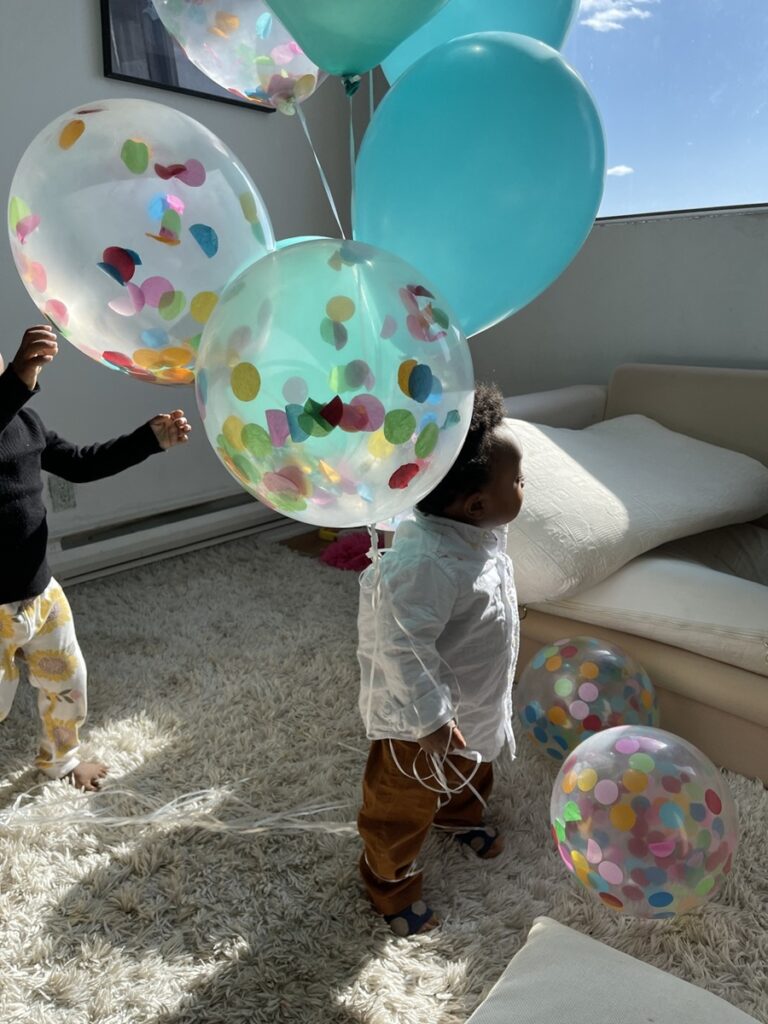
Living as an immigrant mum in Canada means I hold two versions of myself in tension. The Nigerian woman who believes community raises a child, and the Canadian mother learning that community must sometimes be built from scratch. Both are me. Both guide the way I raise my autistic children in a country that still feels half foreign, half familiar.
This blend; the African warmth and the Canadian order, has become the rhythm of our home.
After the Diagnosis
People imagine diagnosis day as a single event. It isn’t. After receiving that phone call or leaving the doctor‘s office, It replays in small moments like in the first meltdown at school or the struggle to explain pain when words fail and the awkwardness of playdates that don’t go as planned.
After each diagnosis, there’s a quiet recalibration. You begin to see your child not through the lens of limitation but through possibility. You learn to ask different questions: What brings them joy? What can they build with that joy?
My eldest loves patterns; he can line up toys with such precision that it feels mathematical. One of my daughters paints with colour combinations I wouldn’t dare to imagine. My other daughter, though non verbal at the moment, makes delightful sounds that feel like lines from long forgotten songs. And now my youngest; our newest diagnosis; is already in love with music and when he sings he is teaching me something about resilience before he can fully explain his world.
Autism has given each of my children a way of being that’s theirs alone. My task is to help that way flourish.
The Practical Work of Hope
Faith, I’ve learnt, is organization with belief stitched into it. When you’re raising autistic children, you learn that heaven also blesses structure.
I started building small systems at home: visual timetables for mornings and evenings, a calm down corner with textures they like, colour coded bins for clothes. It wasn’t always perfect but it was bringing peace even though it just seemed like routine.
These little structures became our foundation. They’re now part of a free Morning & Evening Routines Pack I made for other parents who may be where I was. It’s gentle, printable, and honest; just like our days. You can download it here.
Gentle Parenting and the Art of Seeing
I grew up in a home where discipline was direct, sometimes physical. My parents did their best with what they knew. But with my own children, especially my autistic ones, I knew I had to learn another way.
Gentle parenting isn’t permissive; it’s perceptive. It’s pausing to see what’s behind the behaviour; sensory overload, fear, frustration; and teaching through calm instead of control.
There are moments when I fail, when I raise my voice or forget to breathe first. Yet every day I’m reminded that compassion teaches longer than punishment ever could.
I wrote about this more in Teaching Without Hitting: How a Face Can Say “Try Again”.
Faith Between the Lines
I don’t quote verses out loud as often anymore. I find them living in the pauses; when I breathe before responding, when I choose patience instead of panic. Faith, for me, is no longer a banner but a current underneath everything.
In those moments when I feel the weight of the future; who will care for them when I’m gone, how they’ll find kindness in a world that can be cruel; I remind myself that God’s hand is steady even when mine trembles.
That reminder has kept me from drowning in fear.

Looking Ahead
After the fourth diagnosis, something shifted. I stopped asking, “Why again?” and started asking, “What can I build from this?”
I want to give my children tools they can use long after I’m gone. I want to help them turn their passions into means of independence; skills that could grow into small businesses or crafts. I wrote about this in Raising Workers of Their Own Making, a piece about transforming special interests into micro enterprises.
My goal is no longer to fit my children into the world’s template, but to help shape a world that fits them.
Sensory Fashion and Comfort
One lesson I’ve learnt over these years is that what a child wears can change their day. Scratchy seams, tags, and stiff fabrics can feel unbearable for autistic children.
I started finding and sharing sensory clothing that looks as lovely as it feels such as soft cotton tees, tagless jumpers, adaptive trainers that slip on easily. They don’t just reduce distress; they restore dignity. I’ll be listing the ones we use on this site under Sensory Clothing We Love (Coming Soon).
You can find them, along with our favourite sensory toys and books here
Fashion and comfort don’t have to be opposites. For children like mine, style begins with peace.
The Ache That Teaches Love
That night, after the diagnosis, I tucked each of them into bed and watched the rise and fall of their breathing. Four children. Four diagnoses. Four miracles.
I realised then that autism hadn’t taken anything from us; it had multiplied our capacity to love.
The world often talks about autism in the language of deficit. But our life tells another story: of creativity, humour, music, and grace. Yes, it’s loud. Yes, it’s unpredictable. But it’s also filled with joy which that refuses to be dimmed.
If I could change my children’s challenges to easier ones I would but our stories are not ours to change, they are the Lord’s to write.
Closing Reflection
When people hear that all four of my children are autistic, they often say, “You must be so strong.”
But strength isn’t the right word.
I think the word is anchored.
Anchored in faith.
Anchored in family.
Anchored in love that expands every time life tests it.
And when the waves come; as they will; I remind myself that we’ve been here before, and we’re still standing.
To every mother reading this who’s just heard those same words for the first or fourth time: breathe. Let yourself ache. Then, when you’re ready, take one small action that restores peace. Maybe it’s cooking rice, maybe it’s printing a new schedule, maybe it’s just sitting still.
You are not behind. You are not failing.
You are simply becoming.
Download & Resources
• Free Morning & Evening Routines Pack → Download Here