
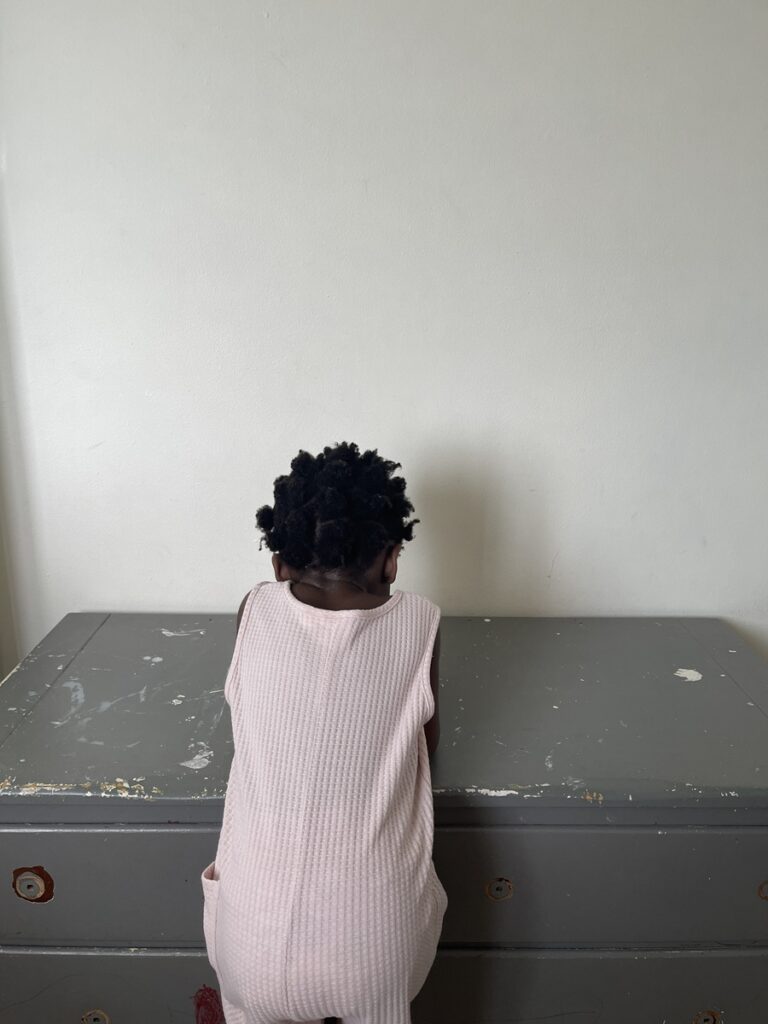
How to respond to autistic children
There is a moment in every home when something goes wrong and the atmosphere changes. A cup spills. A toy flies across the room. A child speaks too sharply or storms away before you finish a sentence. Those small incidents carry more weight than people admit. They reveal how a parent responds under pressure, how a child interprets authority and how teaching takes place inside the home.
In many households across the world, the response arrives quickly and firmly. A slap, a shout, a shake of the shoulder, a burst of frustration that speaks louder than any explanation. It is familiar to many of us who grew up in cultures where hitting was treated as a normal extension of discipline. The adults who raised us did what they believed was right, drawing from what they had been shown in their own childhoods.
Motherhood invites a different view. Raising four autistic children has changed the way I understand teaching, guidance and correction. It has shown me how a parent’s face, tone and body language influence a child far more deeply than any physical punishment. A look can reset behaviour. A gesture can redirect. A short explanation can clarify expectations without frightening or humiliating the child.
In our home, teaching without hitting is not a performance of gentleness. It is a practical, consistent method that protects emotional safety while developing understanding. It is the foundation of how I guide my children, and it shapes much of what I share with families who follow our journey.
This article explains why this approach works, what it looks like in daily practice and how parents can begin to use it in their own homes.

Why many parents begin hitting: A Cultural Lens
Every parent arrives in adulthood with a certain map in their head — a map drawn by childhood experiences, cultural expectations and the authority figures who shaped them. Growing up in Nigeria meant discipline featured strongly in everyday life. Teachers used canes. Relatives corrected children in public. Corporal punishment sat beneath education, social behaviour and religious instruction.
Hitting was often seen as proof of love. A sign of investment. A way to show that the adult cared enough to intervene. Many people still interpret discipline through that lens, and questioning it can feel like questioning their entire upbringing.
Moving to Canada brought distance and clarity. I saw parents correct children calmly and still maintain authority. I watched teachers guide behaviour without force. I witnessed families discipline with structure rather than fear. None of this diminished respect; if anything, it strengthened it. Children responded because they trusted the environment, not because they feared the consequences.
Parenting between two cultures — Nigeria and Canada — created a bridge in my mind. I could honour the parts of my upbringing that taught resilience and responsibility while releasing the parts that placed fear and obedience above understanding.
Teaching without hitting emerged naturally from that tension.
Autism, Behaviour and Why Safety Matters
Autism redefines the meaning of discipline because autistic children experience the world differently. Their behaviour is often shaped by sensory overload, communication differences, emotional flooding or difficulty understanding social cues. What looks like defiance to an untrained eye may simply be confusion, discomfort or anxiety.
Hitting does not resolve any of those challenges.
It adds shock to an already overwhelmed system.
When an autistic child is frightened, their ability to reason collapses. Their nervous system takes over. Their priority becomes survival, not learning. In that state, a lesson cannot land. The child remembers the fear, not the guidance.
Teaching without hitting recognises that children behave according to their inner state. If the parent can regulate the moment, the child can follow. If the parent escalates, the child spirals.
A calm face communicates:
“I see what has happened.”
“I am aware of your behaviour.”
“I expect something different from you.”
“You can try again.”
Fear is absent. Clarity remains.
This is the power behind the phrase a face can say try again.

The Role of Non-Verbal Communication in Child Guidance
Children read faces long before they understand complex instruction. Autistic children, in particular, rely heavily on consistency in expression, tone and posture. They may struggle with extended verbal explanations, but they understand:
- a raised eyebrow
- a firm gaze
- a pause in your movement
- a controlled breath
- a guiding hand returning an item
This is why a parent’s expression can shape behaviour so effectively. It is immediate, understandable and steady. It reduces the emotional distance between parent and child rather than widening it.
Teaching without hitting focuses on these cues because they invite cooperation rather than resistance. A child who feels safe will try again. A child who feels threatened will protect themselves — even if the threat came from the person they love most.
Why hitting does not create better behaviour
Hitting may stop behaviour quickly, but it does not teach the skill the child needs to behave differently next time. It interrupts the action but does not address the reason behind it.
Children learn through:
- modelling
- repetition
- clear examples
- emotional safety
- predictable responses
- guidance that fits their developmental stage
Hitting provides none of these.
Parents often assume that if a behaviour stops after a slap, the child has learnt a lesson. In truth, the child has learnt that physical force follows mistakes. They may avoid the behaviour temporarily, but they do not gain understanding. The underlying issue resurfaces later — often stronger and harder to manage.
The long-term cost of hitting is mistrust. The child begins to anticipate danger inside the home. Emotional closeness weakens because the parent has become unpredictable.
Teaching without hitting protects the relationship, and the relationship is where real behaviour change happens.
Teaching through Face, Tone and Guidance: A Practical Method
Parents often assume gentle discipline requires long speeches or exaggerated patience. It doesn’t. The method is simple:
- Use your face as your first signal. A firm but calm expression communicates that the behaviour has crossed a line and needs correcting.
- Pause briefly. The pause interrupts the behaviour without escalating the moment.
- Demonstrate the correct action. Place the item back in the child’s hand. Show the expected behaviour once more.
- Use short, clear language. “Well done for trying. Let’s do it properly.” “Pick it up and return it.” “Speak kindly.” Autistic children process concise instruction more effectively than long explanations.
- Maintain a steady emotional tone. Your tone regulates theirs.
- End with reassurance. A nod, a small touch, or brief affirmation brings closure to the teaching moment.
Over time, the child associates correction with structure rather than fear.

Real Scenarios From Daily Life
- A sibling dispute: Two children argue over a toy. One pushes the other. Old method: a smack and a raised voice. New method: a firm gaze, a hand guiding them apart, and a short explanation. “You pushed him. That is not acceptable. Wait here.” The child pauses. The behaviour stops. You have room to teach.
- A child drops food deliberately: Instead of shouting, you kneel, meet their eyes and hand the item back. “Pick it up. Place it on the table.” The child learns responsibility without emotional injury.
- A meltdown triggered by sensory overload: Punishment only intensifies distress. Instead, reduce stimulation, soften your voice and assist the child in grounding their emotions. Teaching happens after they have recovered, not during the storm.
Transitioning from Hitting to Guided Teaching
Parents who grew up with physical discipline often worry they won’t know how to correct without it. The transition takes intention but not perfection.
- Start with awareness. Notice the moments when your impatience rises.
- Replace impulse with pause. The pause prevents you from acting out of habit.
- Lead with guidance. Correct the behaviour through example and tone.
- Stay consistent. Behaviour improves when your response becomes predictable.
- Extend grace to yourself. Breaking generational habits takes time.
THE IMMIGRANT MOTHER’S PERSPECTIVE
Raising four autistic children in Canada has forced me to examine everything I was taught about discipline. Some cultural practices cannot survive the reality of our life here.
Autism requires gentleness.
Migration requires adaptation.
Motherhood requires reflection.
My children experience the world differently. They do not need fear. They need firmness, clarity and a grounded parent willing to guide without intimidation.
Holding two cultures at once means choosing which parts of each culture help my children flourish. Teaching through connection rather than force is now part of our family identity.
HOW GENTLE TEACHING BUILDS TRUST LONG-TERM
Children behave better for parents they trust. Trust is built through:
- consistent teaching
- emotional safety
- predictable guidance
- stable routines
- clear boundaries
- dignity preserved during correction
These values become essential as children grow into adolescence and adulthood.
For autistic children, trust shapes the entire support system. When they trust you, they ask for help. They explain discomfort. They share fears. They reveal sensory needs. They lean on you during overwhelm.
Hitting closes that door.
Gentle teaching keeps it open.
A NOTE ON FAITH AND PARENTING STYLE
My faith has guided many of my decisions as a mother. I look to Christ not only for comfort but for examples of corrective firmness without cruelty. Scripture forms part of my approach — quiet strength, patience, truth, guidance and compassion. These qualities sit at the centre of our home.
Parents of faith sometimes feel torn between cultural tradition and Christlike parenting. Both can be honoured, but compassion, dignity and care must lead the way.
More on this sits in my blog:
Faith and the Days That Stretch You Thin
ADDRESSING COMMON QUESTIONS FROM PARENTS
- “Won’t the child think I’m weak?” Authority is not built on fear. It is built on consistency. The child learns that you follow through calmly every time.
- “What if calm correction doesn’t work at first?” Behaviour improves through repetition. You are replacing a long-held pattern. Give it time.
- “How do I correct a child who doesn’t speak?” Use short phrases, hand-over-hand demonstration and facial cues. Many non-speaking children respond well to this.
- “What if other family members disagree?” Do what is best for your child. You are building your home, not recreating someone else’s.
The Long-Term benefits of Teaching Without Hitting
- Stronger parent–child connection
- Better emotional regulation in the child
- Increased confidence
- Trust that strengthens during adolescence
- Clearer communication
- Reduced fear-based behaviour
- Improved problem-solving
- A calmer home
- A healthier adulthood for the child
Your home becomes a place where guidance is expected, but safety is guaranteed.
Guiding through Example: The Heart of This Method
Children model what they see. If they see calm correction, they learn calm correction. If they see shouting, they absorb shouting. If they see force, they learn force.
Teaching without hitting creates a cycle of understanding rather than a cycle of fear.
When a parent guides with dignity, the child grows with dignity.
Download & Resources
• Free Morning & Evening Routines Pack → Download Here